Solano County Superior Court is the main trial court that handles civil, criminal, family, probate, and traffic cases for residents of Solano County, California. The solano county superior court works within the California trial court system and operates under the Judicial Branch of California, where each county has one superior court responsible for local legal matters. The superior court Solano county California manages hearings, court records, filings, and courtroom proceedings through several court divisions, allowing the public to use court services, check case status, submit documents, and get official information from the county courthouse.
Solano County Superior Court provides many public court services that help residents handle legal issues, file cases, and review official records. The solano superior court is part of the statewide California Superior Courts, which serve as the first level of the California trial court structure before any appeal moves to higher courts. Users can perform case search, request copies of records, file legal forms, find court division contacts, and locate courthouse offices, making the court the central place for legal filings, hearings, and court administration in the county.
What Is Solano County Superior Court?
The superior court Solano county California is the main trial court serving Solano County and a key part of the California judicial branch. It operates as the first level in the California Superior Court system, handling a variety of legal matters under state law. The Solano County Court manages cases, maintains court records, and provides essential services for residents. As the primary local courthouse, it ensures that legal processes are fair, transparent, and accessible throughout the county.
Part of the California Superior Court
The superior court in Solano County is one of 58 county-level courts forming the statewide trial court California network. It functions within the California judicial branch, following state rules and standards while serving the local population. The county superior court California oversees a range of legal matters at the trial level, providing a structured system that supports higher appellate courts and ensures consistent application of laws across the state. The Solano superior court manages civil, criminal, family, probate, and traffic cases. It addresses disputes, legal violations, and estate matters while offering services for small claims and juvenile cases. The court is organized into divisions to efficiently handle different case types and support legal processes in the county.
- Civil disputes, contracts, and personal injury
- Criminal cases including misdemeanors and felonies
- Family law matters such as divorce and custody
- Probate cases, wills, and estates
- Traffic violations and small claims
Role in the Judicial Branch
The superior court Solano county California is a critical part of California’s judicial framework. It delivers trial-level decisions, manages jury services, and maintains accurate public records. The superior court in Solano County helps enforce state laws locally while supporting the broader county court system California, ensuring residents have access to reliable legal processes and fair resolution of disputes.
Solano County Superior Court Case Search
The Solano county superior court case search allows residents, attorneys, and interested parties to access case details, dockets, and official records for civil, criminal, family, probate, traffic, and small claims cases. The Solano superior court provides both online and in-person options, making it simple to track case progress, review filings, and obtain official copies. This service supports transparency and ensures the public can access important legal information efficiently within the California trial court system.
Steps for Searching Cases Online
To perform an online Solano county superior court case search, follow these steps carefully:
- Visit the Official Portal: Go to the official court case search portal: https://portal.solano.courts.ca.gov/
- Log In or Create an Account: For complete access, including electronic filing (eFiling) details, register for a free account or log in if you already have one.
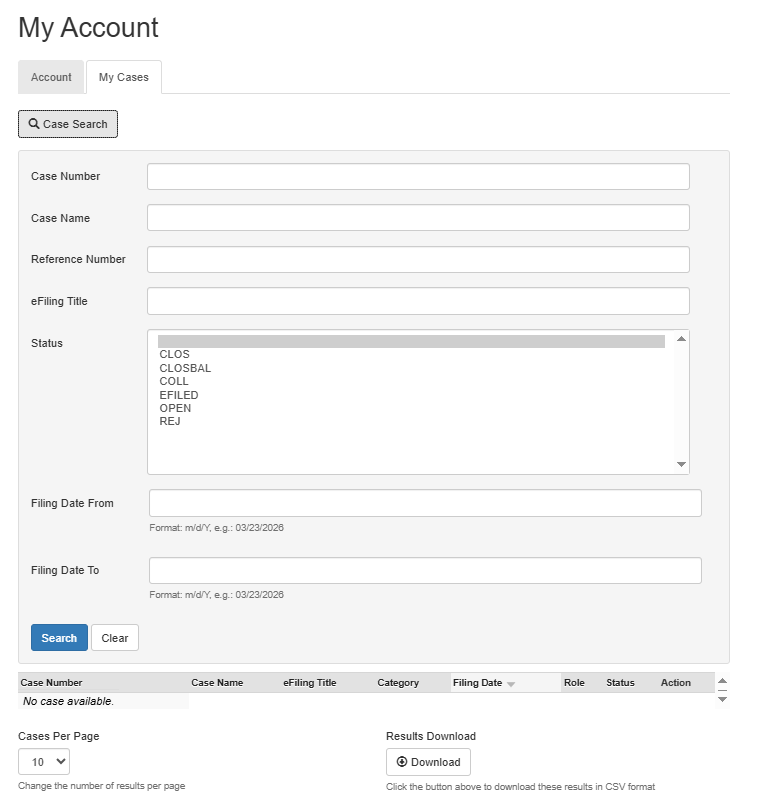
- Open the “My Cases” Section: Navigate to the My Cases tab, then click Case Search to open the search form. The form includes fields for precise filtering.
- Enter Case Information: Fill out any of the following fields to narrow your search:
- Case Number: Enter the exact case number for the fastest and most accurate result.
- Case Name: Input the name of the party involved in the case (last name, first name).
- Reference Number: Use this if you have a unique internal reference number associated with the case.
- eFiling Title: Useful for searching electronically filed cases or specific document titles.
- Status: Select one or more options: CLOS (Closed), CLOS BAL (Closed Balance), COLL (Collection), EFILLED (Electronically Filed), OPEN, REJ (Rejected).
- Filing Date From / To: Filter cases by a specific filing date range to locate recent or historical cases.
- Click “Search” Press the Search button to generate results. The results table will display:
- Case Number
- Case Name
- eFiling Title
- Category
- Filing Date
- Role
- Status
- Action buttons (if applicable)
- Review and Download Results: Examine the search results. Use the Cases Per Page dropdown to adjust how many cases appear per page. To save the results, click the Download button to export the table in CSV format.
- Request Copies of Documents: If you need certified copies or additional filings, submit a request through the portal or visit the clerk’s office. Fees typically apply for copies.
Searching Cases at the Clerk’s Office
For users who prefer in-person assistance they can visit Clerk’s office to fetch and retrieve court records and search cases:
- Visit the Solano County courthouse during business hours.
- Provide the clerk with case number, party names, eFiling title, or filing date range.
- Use the public access terminals to search for cases independently.
- Request printed or certified copies directly from court staff.
Solano County Superior Court Jurisdiction and Case Types
The Solano County Superior Court handles many legal matters through specialized court divisions. Each division has a defined case jurisdiction that determines which matters it can hear and resolve. As part of the California trial court system, this court processes a wide range of superior court cases, including civil disputes, criminal prosecutions, family matters, and probate proceedings. These divisions help the court organize hearings, filings, and trials efficiently so that residents can address legal disputes through the proper branch of the county court system.
Civil Division
The Civil Division handles disputes between parties where criminal charges are not involved. Most civil cases focus on financial compensation, property rights, contracts, or personal injury claims. The division manages many California trial court cases where one party believes another caused financial harm or failed to follow an agreement. Judges examine evidence, review legal arguments, and issue rulings that resolve conflicts or award damages. This division is one of the busiest areas of the court because civil disagreements occur in business, housing, and daily activities.
- Contract disputes and agreement violations
- Personal injury and negligence claims
- Property disputes and landlord-tenant cases
- Business litigation and financial disagreements
- Enforcement of court judgments
Criminal Division
The Criminal Division deals with cases where prosecutors charge a person with violating criminal law. These superior court cases may involve misdemeanors or serious felony offenses under California law. Judges supervise hearings, review evidence, and conduct jury trials when necessary. The division handles several stages of criminal proceedings, from arraignment to sentencing. Court staff maintain case records and schedules so that criminal matters move through the system efficiently while protecting the legal rights of defendants and the community.
- Misdemeanor criminal offenses
- Felony criminal charges
- Preliminary hearings and arraignments
- Jury trials and court rulings
- Sentencing and probation matters
Family Law Division
The Family Law Division focuses on legal issues that affect family relationships. These court divisions handle cases involving marriage, children, and financial responsibilities between family members. Judges review filings, listen to testimony, and issue decisions that follow California family law standards. Many california trial court cases in this division involve emotional or personal disputes, so the court works to provide structured hearings and clear legal outcomes. Orders issued by the court often address custody arrangements, financial support, or protective measures for family members.
- Divorce and legal separation
- Child custody and visitation orders
- Child support and spousal support
- Domestic violence restraining orders
- Parentage and paternity cases
Probate Division
The Probate Division handles legal matters related to estates, wills, and guardianships. This division supervises the process that follows a person’s death to confirm how property and assets should be distributed. Judges review estate filings, approve executors, and monitor financial responsibilities connected with estates or trusts. Many superior court cases in probate involve family members seeking clear direction on inheritance matters. The division also addresses guardianship or conservatorship cases where someone requires legal protection or financial management.
- Probate of wills and estate administration
- Trust management and supervision
- Guardianships for minors
- Conservatorships for adults
- Estate dispute hearings
Small Claims Division
The Small Claims Division resolves minor financial disputes through a simplified legal process. These superior court cases usually involve limited monetary amounts and shorter hearings than standard civil lawsuits. The court encourages parties to present their claims directly without formal legal representation. This division provides a practical option for residents who want a quick resolution to everyday financial conflicts. By simplifying procedures, the court allows smaller disputes to move through the county court system without extensive litigation.
- Unpaid debts and financial disputes
- Property damage claims
- Security deposit disagreements
- Minor contract conflicts
Traffic Division
The Traffic Division manages cases related to vehicle law violations and roadway safety rules. Many drivers interact with this division after receiving a citation for a traffic offense. These California trial court cases involve reviewing tickets, scheduling hearings, or processing fine payments. Judges and court staff review evidence, determine penalties, and provide drivers with the opportunity to contest citations. Traffic matters represent a large portion of daily court activity across the court divisions within the county system.
- Speeding and moving violations
- Parking citations
- Driving without a valid license
- Insurance violations
- Other roadway offenses
Solano County Superior Court Divisions and Departments
The Solano County Superior Court operates through organized court divisions and specialized departments that manage different types of legal matters. These superior court departments help the court process cases efficiently and deliver essential court services to the public. The structure includes judges, courtroom staff, and administrative offices that work together within the Judicial Branch California system. Each division focuses on particular case categories while the overall court administration coordinates operations, scheduling, records management, and public assistance across all courthouse locations.
Court Departments and Case Management
The superior court departments function as the operational units where hearings, motions, and trials take place. Each department focuses on a specific case type, which helps organize the large volume of California trial court cases handled in Solano County. Judges are assigned to these hearing departments based on their area of responsibility. This structure allows the court to maintain consistent procedures and clear scheduling for different legal matters.
- Civil hearing departments
- Criminal court departments
- Family law courtrooms
- Probate hearing departments
- Traffic and small claims departments
Judges and Judicial Officers
Judges serve as the primary decision-makers within the court divisions of the Solano County court system. Each judge presides over hearings, reviews evidence, interprets laws, and issues rulings in accordance with California statutes. Judicial officers work within designated hearing departments, allowing them to develop expertise in specific types of cases. Their role within the Judicial Branch California includes ensuring fairness in proceedings and maintaining the integrity of the legal process for every case brought before the court.
- Presiding judges overseeing courtroom proceedings
- Commissioners handling certain specialized hearings
- Judges assigned to specific court divisions
- Judicial officers managing daily hearing schedules
Court Administration and Operations
The court administration team manages the operational side of the court system. Administrative staff coordinate scheduling, maintain facilities, manage technology systems, and support judges and courtroom staff. Their work helps the superior court departments function smoothly across multiple courthouse locations in Solano County. Effective administration keeps hearings organized, ensures proper case flow, and supports the delivery of reliable court services for residents and legal professionals.
- Case scheduling and courtroom assignments
- Court technology and record management
- Budget and facility management
- Coordination between departments
Clerk’s Office and Public Services
The Clerk’s Office provides many of the public-facing court services for the Solano County court system. Clerks maintain official case records, process filings, and assist visitors with document requests or procedural information. This office supports both the court divisions and the general public by ensuring accurate documentation and smooth filing procedures. Clerks play a key role in maintaining transparency and organization across all superior court departments in the county courthouse system.
- Filing and processing legal documents
- Maintaining official court records
- Providing copies of case documents
- Assisting visitors with procedural questions
Filing a Case in Solano County Superior Court
Filing a case in the Solano County Superior Court begins with submitting the correct documents and forms to the appropriate court division. The case filing process allows residents, businesses, and legal representatives to start legal actions such as civil lawsuits, family law matters, probate cases, or small claims. Each superior court filing requires proper court forms, payment of required fees, and review by the clerk’s office. Many of these filings later become part of public records, depending on the case type and legal restrictions. Following the correct steps helps ensure the court accepts the documents and schedules the case for hearing within the California trial court system.
Choose the Correct Court Division
The first step in file case superior court procedures is selecting the appropriate division. Each division manages different types of legal matters, so choosing the correct one ensures the documents reach the proper department. The division determines how the case will proceed and which judge or hearing department may handle the matter. Common divisions for case filing include:
- Civil Division for disputes, contracts, or personal injury cases
- Family Law Division for divorce, custody, and support matters
- Probate Division for estates, wills, and guardianships
- Small Claims Division for minor financial disputes
- Traffic Division for citation-related cases
Prepare the Required Legal Forms
After selecting the correct division, the next step is preparing the required court forms. These court documents contain details about the parties involved, the legal claim, and the type of relief requested from the court. Many forms follow statewide standards used across the Judicial Branch California system. Accurate information is important because incomplete or incorrect forms may delay the superior court filing process.
- Complaint or petition form
- Case cover sheet
- Summons or notice forms
- Supporting declarations or attachments
File the Documents With the Clerk
Once forms are complete, they must be submitted to the clerk’s office at the appropriate Solano County courthouse. The clerk reviews the court filing to confirm the documents meet formatting and procedural requirements. After acceptance, the clerk assigns a case number and enters the matter into the court’s case management system. Court filing process and methods may include:
- In-person filing at the courthouse
- Electronic filing (eFiling) for certain case types
- Filing through authorized service providers
Pay the Filing Fees
Most superior court filing actions require a filing fee. The amount depends on the case type and division. Payment may be made at the clerk’s office or through an online payment system for electronic filings. Fee waivers may be available for eligible parties who cannot afford court costs. Accepted payment methods may include cash, credit cards, checks, or money orders depending on the court’s policy. It is important to confirm the exact fee amount before submitting documents to avoid delays. Keeping proof of payment is recommended for record-keeping and future reference.
Fee Schedule and Charges
The amount of Solano county court fees depends on the category of the case and the type of service requested. Civil filings usually cost more than small claims, and certified copies have separate charges. Criminal cases may include fines ordered by the judge. The court updates the fee schedule when state rules change, so checking the current amount before filing is recommended. Paying the correct fee at the time of submission helps the clerk process the case without delay.
| Case / Service Type | Estimated Fee (USD) | Typical Processing Time |
|---|---|---|
| Civil case filing (limited) | $225 – $370 | Same day to 3 days |
| Civil case filing (unlimited) | $435 – $450 | Same day to 3 days |
| Small claims filing | $30 – $75 | Same day |
| Family law filing (divorce / custody) | $435 | 1–3 days |
| Probate case filing | $435 – $650 | 3–5 days |
| Motion / additional filing | $60 – $120 | Same day |
| Certified copy request | $40 per document + copy cost | Same day to 2 days |
| Criminal fine payment | Varies by case | Immediate after payment |
| Traffic fine payment | Varies by violation | Immediate after payment |
Receive a Hearing Date
After the case filing is accepted, the court schedules the next procedural step. This may include a hearing date, case management conference, or trial scheduling notice. The court sends official information to the parties involved so they know when to appear and what steps to complete before the hearing. Notifications may be sent by mail or made available through the court’s online system. Parties are responsible for reviewing all instructions and meeting deadlines before the hearing. Missing a scheduled date may result in delays, penalties, or dismissal of the case.
Location and Courthouse Addresses
The Solano County Superior Court location includes several courthouse buildings across the county, allowing residents to attend hearings, file documents, and request records at the nearest court location. Each Solano courthouse handles specific departments such as criminal, civil, family, or traffic matters. These superior court California location sites provide public counters, clerk services, and courtrooms where legal proceedings take place. Knowing the correct courthouse address helps visitors find the proper building for their case, receive assistance from court staff, and arrive on time for scheduled hearings.
Fairfield Courthouse
The Fairfield courthouse is the main administrative center for the Solano County court system. Many key court divisions and administrative offices operate from this court building, including criminal departments and court administration. Visitors can attend hearings, file documents, and request case information at this central court location. These Solano County Superior Court locations help residents easily reach the proper court building for their case and receive necessary legal and administrative services.
Courthouse Address:
Solano County Superior Court – Hall of Justice
600 Union Avenue
Fairfield, CA 94533
Phone: (707) 207-7300
Hours: Monday – Friday: 8:00 AM – 4:00 PM
Departments:
- Criminal court departments
- Court administration offices
- Jury services
- Clerk’s office services
Vallejo Courthouse
The Vallejo courthouse handles many civil, family law, and probate matters. This solano courthouse serves residents in the southern part of the county and provides multiple hearing departments for different case types. It is one of the busiest superior court California location sites for family law filings and civil disputes.
Courthouse Address:
Solano County Superior Court – Vallejo Branch
111 Amador Street
Vallejo, CA 94590
Phone: (707) 561-7880
Hours: Monday – Friday: 8:00 AM – 4:00 PM
Vacaville Courthouse
The Vacaville courthouse provides services for residents living in the northern region of Solano County. This court location supports traffic matters, limited civil filings, and other superior court departments. Visitors often use this court building for traffic hearings or general clerk assistance.
Courthouse Address:
Solano County Superior Court – Vacaville Branch
725 Court Street
Vacaville, CA 95688
Phone: (707) 469-6500
Hours: Monday – Friday: 8:00 AM – 4:00 PM
Rio Vista and Other Branch Locations
The Rio Vista courthouse and smaller branch offices provide additional court services for residents in surrounding communities. These locations handle specific case types and help reduce travel distance for people attending hearings. Each Solano courthouse operates under the same Judicial Branch California system and follows standard procedures for filings, hearings, and records.
Courthouse Address:
Solano County Court Rio Vista Branch
1000 Main Street
Rio Vista, CA 94571
Phone: (707) 374-3176
Hours:
Monday – Friday: 8:00 AM – 4:00 PM
Frequently Asked Questions
The Solano County Superior Court FAQs section answers common court help questions related to case searches, filings, payments, and courthouse services. Many residents contact the court for help with legal questions, hearing schedules, or locating records. The information below explains how the court system works and where visitors can find assistance with case search help, court procedures, and clerk services.
How can someone perform a Solano County Court case search?
A Solano County Superior Court case search can be completed through the court’s online case lookup portal or by visiting a courthouse clerk’s office. The online system allows users to search for cases using a case number, party name, or filing date. Results usually show case status, hearing dates, and basic docket information. If records are not available online, visitors can request assistance at the courthouse where public access terminals are available. Clerk staff can help locate files and explain how to request copies of official court documents.
Where is the Solano County Superior Court courthouse located?
The Solano County Superior Court operates multiple courthouse buildings across the county. The main administrative location is the Hall of Justice in Fairfield, which handles criminal matters and court administration. Other courthouse locations include Vallejo, Vacaville, and Rio Vista branches. Each court location manages specific departments such as civil, family law, probate, or traffic matters. Residents should confirm the correct courthouse address before visiting because hearings and filings are handled at different buildings depending on the case type.
What types of cases does the Solano County Court handle?
The Solano County Superior Court manages a wide variety of superior court cases as part of the California trial court system. These cases include civil disputes, criminal prosecutions, family law matters, probate proceedings, small claims disputes, and traffic violations. Each case type is assigned to a specific court division with judges and hearing departments that specialize in that area. The court’s case jurisdiction covers most legal disputes that arise within Solano County, making it the primary trial court responsible for resolving local legal matters.
How can someone file a case in the Solano County Court?
To begin a case filing, a person must prepare the required court forms and submit them to the clerk’s office in the appropriate division. The process usually starts by selecting the correct court division, completing legal documents such as a complaint or petition, and filing those documents with the court. After the clerk reviews the paperwork, the case is assigned a number and entered into the court system. Filing fees normally apply, though some parties may request a fee waiver depending on financial eligibility.
How can fines or court fees be paid?
Court fines and fees can usually be paid through several methods offered by the Solano County Superior Court. Many traffic citations and minor financial obligations can be paid online using the court’s payment portal. Payments may also be completed in person at a courthouse clerk counter or by mail with the appropriate case information included. The payment system records the transaction in the case file so the court can update the case status. Individuals should always include the correct case number to avoid delays in processing payments.