The Solano County court docket is a complete record of all scheduled court activities, filings, and updates related to legal cases. It tracks hearings, motions, and rulings for civil, criminal, family, and probate matters. Accessing the docket helps parties involved, attorneys, and the public stay informed about ongoing cases and ensure that legal processes are followed properly. Users can quickly check case status in Solano County and review docket entries in Solano, which include all updates issued by the court in chronological order.
Solano County Court Docket in Solano County includes detailed records of hearings, motions, and legal filings associated with a case. It shows the timeline of each case from initial filing to resolution. Users can see hearing dates, scheduled trials, and court decisions that affect case outcomes. This information helps parties track deadlines, monitor case progression, and verify official rulings. By consulting court records, attorneys can prepare legal strategies, and interested parties can confirm actions taken, ensuring transparency and accountability within Solano County’s judicial system.
What is Solano County Court Dockets
A Solano County court docket is an official record that tracks all case activity, including filings, hearings, and updates on case status. It functions as a chronological log of legal actions and provides a clear schedule for ongoing cases. The docket helps attorneys, parties, and the public monitor the progression of cases while maintaining transparency. It includes filings, motions, hearing dates, and judgments, giving a complete picture of each matter. These records are often referred to as Solano County Court case listings or official case schedules.
- Case filings: complaints, petitions, motions
- Hearing schedules: trials, pre-trial, and motion hearings
- Case status updates: pending, continued, resolved
What a Court Docket Includes
A court docket in Solano County shows every step of a case, from initial filings to final resolution. Each entry contains details like filing dates, involved parties, the assigned judge, hearing schedules, and motions submitted. Court dockets allow legal professionals to plan effectively and enable public access to essential information. Many use court record search Solano tools to retrieve these entries, and public court records are often consulted for case monitoring or research purposes. Docket entries Solano offer transparency and help track active legal matters.
- Docket numbers for easy case retrieval
- Judge and party assignments
- Chronological record of filings and motions
How Court Dockets Are Maintained and Updated
Solano County court dockets are updated regularly by court clerks to reflect current case activity. Each filing, hearing, or motion outcome is logged to maintain an accurate record of case progression. The process involves submission, clerk review, scheduling hearings, and recording results. Keeping dockets current ensures cases are efficiently tracked, provides accurate information to parties, and makes official case schedules publicly accessible. This ongoing update process guarantees transparency and allows attorneys and litigants to stay informed on case developments.
- Steps: filing → clerk entry → hearing → judgment
- Real-time updates for pending and resolved cases
- Accessible online for public reference
How to Search Solano County Court Docket
Searching the Solano County court docket allows users to find case information, track hearings, and view filings. Some cases require secure access using a case number and a security token provided by the court. Following detailed step-by-step instructions ensures accurate results, prevents errors, and allows users to see official docket entries. Users can also apply filters such as case type, date, or courtroom to narrow down results. This guide explains both public searches and secure case access.
Open the Portal
Begin by visiting the official Solano County Case Access Portal: https://portal.solano.courts.ca.gov. Use a modern, updated web browser like Chrome, Edge, or Firefox for best results. Make sure you have your case number and security token ready, as these are required to access restricted cases. This portal provides a secure way to view case details, court filings, and docket entries without visiting the courthouse in person.
Go to “Get Case Access”
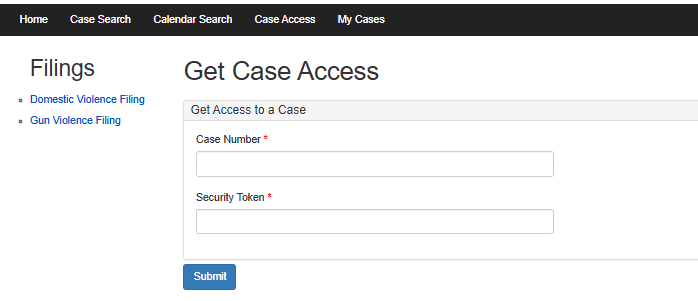
Once on the portal, locate the “Case Access” tab in the top menu and click it. You will see the Get Case Access form. This form requires two pieces of information: the Case Number and the Security Token. The security token is issued by the court and is necessary for restricted or private cases. Public cases may be accessible without a token through the regular Case Search feature.
- Case Number field – exact number assigned by the court
- Security Token field – unique code provided for restricted access
Enter Case Number
In the Case Number field, type the complete docket number exactly as issued by the court. Include all letters, numbers, hyphens, and any prefixes. A correct case number is crucial because even one incorrect character may prevent the portal from locating the case. Double-check the number before submitting. This ensures that the portal retrieves the right Solano County court docket and all associated filings.
- Include hyphens or letters as printed
- Verify the number from official documentation
- Do not use spaces unless indicated in the case number
Enter Security Token
The Security Token field requires the unique code given to you by the court for restricted cases. This token ensures that only authorized users can view sensitive case information. Without it, the portal will deny access, even if the case number is correct. Keep the token confidential and enter it carefully, as it is case-specific and cannot be shared.
- Enter token exactly as provided
- Do not share with unauthorized individuals
- Contact the court if the token is lost or invalid
Submit the Form
After entering the case number and security token, click the Submit button. The system will verify your credentials and, if correct, grant access to the case. At this point, you will be able to view the case summary, filings, hearing schedules, and docket entries. If an error occurs, double-check both fields for typos or formatting errors, refresh the page, and try again.
- Click Submit
- Ensure no extra spaces in either field
- Retry if access fails
View Case Information
Once access is granted, you can view all the details of your case, including:
- Party names and attorneys – plaintiffs, defendants, and legal representation
- Court dates and hearing schedules – upcoming hearings or past court sessions
- Filing history and document summaries – all documents submitted to the court
- Case status and upcoming events – pending actions, continuances, or judgments
Types of Court Records Available
Court records in Solano County include criminal, civil, family, traffic, probate, and small claims cases. Each type provides detailed information about filings, hearings, and outcomes, giving users access to official court documentation and court file details. These records help track case progress, provide historical case data, and ensure transparency in the legal process. Whether for professional use, research, or personal interest, understanding the types of court records available helps identify where to locate specific information efficiently.
Criminal Case Records
Criminal case records document legal actions involving violations of state law, from minor offenses to serious felonies. These records contain information about charges, court dates, hearings, pleas, and final judgments. They also include docket entries Solano and sometimes probation or sentencing details. Criminal records are crucial for attorneys, background checks, and legal research, though some sensitive information may have restricted access to protect privacy.
- Defendant and case information
- Arrest and charge details
- Court hearings and hearing records Solano
- Sentencing and appeals
Civil Case Records
Civil records cover disputes between individuals, businesses, or organizations where no criminal charges are involved. They include filings such as complaints, responses, motions, hearings, and final judgments. These records provide court file details on settlements, awards, or enforcement actions. Civil case documentation is essential for resolving property disputes, contract issues, and other non-criminal conflicts, offering clear timelines and detailed insights into legal processes.
- Plaintiff and defendant information
- Complaint and response filings
- Court dates and outcomes
- Settlements or judgments
Family Case Records
Family court records involve matters such as divorce, child custody, support, adoption, and domestic violence cases. These records include petitions, motions, hearings, and official court documentation regarding parental rights or protective orders. Some sensitive information may be partially restricted. Family case records help track court actions and ensure compliance with legal orders while providing accurate historical documentation for future reference.
- Divorce or separation filings
- Child custody and support orders
- Domestic violence protective orders
- Adoption and guardianship proceedings
Traffic Case Records
Traffic records document violations like speeding, DUIs, and other infractions. They contain citations, docket entries Solano, hearing schedules, and penalties or fines. These records provide court file details needed for insurance claims, employment verification, or legal reference. They are often straightforward but remain important for maintaining accurate legal and driving histories.
- Citation and vehicle details
- Hearing schedules and rulings
- Fines, penalties, or probation
Probate Case Records
Probate records involve the administration of estates, wills, and trusts. They include filings, inventories, notices, hearings, and court-approved property distributions. These records provide legal filings Solano and official court documentation regarding asset allocation, executor appointments, and estate resolution. Probate records are vital for legal transparency, family estate planning, and resolving disputes over inheritance.
- Will submissions and estate inventories
- Executor or administrator appointments
- Court-authorized property distributions
- Hearing schedules and judgments
Small Claims Case Records
Small claims records cover minor financial disputes below a set monetary limit. They contain filings, hearing schedules, judgments, and court file details. Small claims cases are generally faster and do not require attorney representation. These records provide a clear timeline of disputes, court decisions, and any enforcement actions taken to resolve the case.
- Plaintiff and defendant information
- Claim amounts and filings
- Hearing schedules and outcomes
- Judgment enforcement
Docket Entries & Case Timelines
Docket entries are official records summarizing all filings, motions, hearings, and rulings in a court case. They provide a chronological view of a case’s progress and serve as a reference for parties, lawyers, and the public. Alongside case timeline Solano, these entries illustrate how legal proceedings unfold and highlight key events in a case, offering clarity on its current status and future steps.
What Are Docket Entries?
Docket entries Solano record every action taken in a case. They include the date of the action, a brief description, and the party responsible for the filing. Common entries include motions, responses, court orders, and judgments. These entries act as an official log, allowing users to see how a case develops without reviewing the full case file. Accurate entries ensure that all proceedings are documented, providing a reliable reference for legal research or monitoring case activity.
- Filing types and submissions
- Court actions and rulings
- Responsible parties and attorneys
- Updates on scheduling
How Docket Entries Reflect Case Progress
Each docket entry corresponds to a specific step in the case. When a motion is filed, a hearing is scheduled, or a judgment is rendered, it is recorded as a docket entry. Reviewing these entries helps track how quickly a case is moving, identify delays, and monitor compliance with court orders. Hearing records Solano are often included, showing the outcome of hearings and related proceedings. Together, these entries provide a real-time overview of the case’s development from filing to resolution.
- Shows chronological case progress
- Tracks upcoming hearings and deadlines
- Provides insight into court decisions
- Highlights procedural actions taken
Case Timelines
A case timeline Solano is a chronological summary of major events in a case. Timelines connect docket entries to significant milestones, such as filing dates, hearings, motions, and final judgments. They make it easier to visualize the case’s flow and understand the sequence of events. Key milestones often include the initial complaint, responses by the opposing party, hearings, trial dates, rulings, and final disposition. Timelines help attorneys plan strategy and allow interested parties to track legal developments efficiently.
- Initial filing and responses
- Scheduled hearings and trials
- Orders and rulings
- Final judgment and enforcement
| Time from Filing | What It Represents | Typical Outcome / Next Step |
|---|---|---|
| Day 0 | Case enters the system | Case number assigned and judge assigned |
| Day 0–30 | Response period | Filed answer/response enters docket |
| Day 30–60 | Early planning | Parties discuss deadlines with judge |
| Day 60–90 | Dispute on issues before trial | Motions decided or continued |
| Day 90–120 | Evidence exchange period ends | All discovery must be completed |
| Day 120 | Preparation for trial | Judge evaluates readiness |
| Day 150–210 | Final case resolution | Verdict or settlement |
| Post‑Trial +30 | Case disposition | Final judgment on docket |
| Post‑Trial +60 | Potential continuation | Appeal filing enters docket |
Combining Docket Entries and Timelines
Using docket entries alongside a case timeline provides a full picture of a case. Docket entries detail each action, while the timeline shows how these actions connect over time. Together, they help users anticipate next steps, monitor compliance with court orders, and maintain accurate legal records. Administrative information, such as the judge assigned, case number, and department, is also captured by the Clerk of Court. This combination improves transparency, ensures accountability, and allows anyone following a case to clearly understand its progression.
- Visualizes case flow from start to finish
- Links filings to hearings and rulings
- Tracks deadlines and procedural compliance
- Supports legal research and monitoring
Locations & Contact Information
Solano County court locations, including main courthouses and satellite offices with their official court address, contact numbers, and typical operating hours. These are the primary facilities where people attend hearings, file court paperwork, or access public court services in Solano County, California. Each location may handle specific case types, so it is important to confirm the correct courthouse before visiting. Operating hours can vary by department, especially for clerk services and public access windows. Visitors should also review security guidelines and bring necessary documents to ensure a smooth court visit.
Main Courthouse Locations
Solano Superior Court – Hall of Justice (Fairfield)
- Official Court Address: 600 Union Ave, Fairfield, CA 94533, USA
- Phone: (707) 207‑7373 (General Information)
- Hours: Monday – Friday: 8:00 AM – 5:00 PM (Clerk’s Office typically open 8:00 AM – 3:00 PM)
This is the primary courthouse for many case types, including general civil, criminal, family, juvenile, and probate matters.
Old Solano Courthouse (Fairfield)
- Official Court Address: 580 Texas St, Fairfield, CA 94533, USA
- Phone: (707) 207‑7300
- Hours: Monday – Friday: 8:00 AM – 5:00 PM (Clerk’s Office open 8:00 AM – 3:00 PM)
This historic courthouse houses the Civil/Small Claims Division and the Civil Mediation Center.
The Solano County Superior Court – Solano Justice Building (Vallejo)
- Official Court Address: 321 Tuolumne St, Vallejo, CA 94590, USA
- Phone: (707) 561‑7880
- Hours: Monday – Friday: 8:00 AM – 5:00 PM (Clerk’s Office open 8:00 AM – 3:00 PM)
The Vallejo branch serves northern Solano County and handles many of the same case types as the Fairfield facilities.
Solano County Superior Court – Satellite Office (Vallejo)
- Official Court Address: 365 Tuolumne St, Vallejo, CA 94590, USA
- Phone: (707) 553‑5000
- Hours: Monday – Friday: 8:00 AM – 5:00 PM (limited services)
This auxiliary office assists with public access and filings when the main Vallejo location is busy.
Superior Court of California Family Law Solano County (Fairfield)
- Official Court Address: 600 Union Ave, Fairfield, CA 94533, USA
- Phone: (707) 207‑7341
- Hours: Monday – Friday: 8:00 AM – 5:00 PM
This division focuses on family law matters such as custody, support, and divorce.
Contact & Visiting Information
All courthouse locations listed above follow standard operating hours and may observe official courthouse holidays as published by the Superior Court of California, County of Solano.
- General Court Information: (707) 207‑7373 (administrative inquiries)
- Clerk’s Office Hours (All Locations): Typically 8:00 AM – 3:00 PM (Monday – Friday)
- Security: All court facilities require security screening upon entry.
Frequently Asked Questions
Many people need quick answers when working with the court docket Solano County. Understanding how to search, access, and retrieve records helps reduce delays and confusion. The following FAQs address the most common questions about case numbers, online access, public availability, docket updates, legal filings, and problem-solving tips. Each answer provides clear guidance and practical steps to ensure accurate results while following official court procedures.
How do I find my case number?
To find your case number, start by checking any official documents you received from the court, such as summons, notices, or letters. If you don’t have those, use the Solano Superior Court’s online portal to search by party name or attorney. Enter full names and any relevant dates for accurate results. If online access does not work, visit the courthouse clerk’s office where the case was filed. Staff can provide the case number after verifying your identity and case details.
Can I access court records online?
Yes, many Solano County court records are available online. The public portal provides docket entries Solano, case summaries, upcoming hearing dates, and some filings. Certain documents, like sealed family law or juvenile records, may not be accessible online. Some files require a registered account to view. If a document is unavailable digitally, you can request it in person at the clerk’s office or submit a written request with applicable fees. This ensures you access the most accurate and official records.
Are all records public?
Not all records are public. Most civil and criminal case summaries are available, but some may be sealed or restricted to protect privacy. Examples include juvenile cases, certain family law matters, and adoption or mental health records. Public users cannot access sealed documents online or at the courthouse without court approval. For open cases, the portal provides court file details and hearing records Solano. Always check if a record is restricted before attempting retrieval or online access.
How often are docket entries updated?
Docket entries are updated regularly, usually daily. Each new filing, hearing, or court action is added to the register of actions once processed. Updates can include motions, orders, judgments, or rescheduled hearings. Some delays may occur due to processing time or system updates, but online portals generally reflect changes quickly. Monitoring docket entries allows parties and attorneys to track case progress, verify upcoming dates, and confirm that filings have been officially recorded. Regular checking ensures nothing is missed in procedural deadlines.
Can I get copies of legal filings?
Yes, you can request copies of filings from the clerk’s office. Photocopies typically carry a small fee per page, while certified copies cost more. You may also view records at public access terminals without charge. Requests require the case number, names of parties, and the specific documents needed. Some filings may only be available for in-person retrieval due to privacy or security restrictions. This allows proper handling of retrieval queries and ensures official documentation is obtained in a verifiable format.
What should I do if I can’t find docket information?
If you cannot locate docket entries online, confirm the case number or party names are correct. Some cases may be restricted, older, or not fully digitized. In these situations, visit the courthouse clerk’s office and use public access terminals. Clerks can guide you to the register of actions or help submit a formal request for records. This ensures accurate retrieval of case information while addressing access questions. Always provide full details like party names, filing dates, and type of case to speed up assistance.