Solano County Family Court provides legal services and hearings for a wide range of family-related issues, including custody, support, and domestic disputes. This court plays a key role in ensuring fair resolutions for families within the county while following California family law. Individuals can bring cases regarding child custody, visitation, spousal support, divorce, guardianship, and domestic relations. The court manages these matters through structured hearings, filings, and rulings, while also offering resources like forms, schedules, and guidance to help parties navigate the legal process efficiently.
Family court also emphasizes resolving conflicts with minimal disruption to family life. Alternative dispute resolution, including mediation, is available for many cases, helping parties reach agreements outside formal hearings. Judges prioritize the best interests of children in custody matters and safety in domestic disputes. Guardianship and support cases receive careful review to ensure financial and personal responsibilities are met. Through these services, the court aims to provide consistent, fair outcomes while supporting families in resolving disputes legally and constructively.
Searching Family Court Cases in Solano County
Custody court Solano offers a way for families, attorneys, and authorized users to look up information about custody, support, divorce, and other family case records. This search lets users view basic case status, docket entries, and upcoming hearings through official systems provided by the court. Case details are updated regularly, though sensitive information in family cases may be restricted to protect privacy.
For official case searches, County of Solano official site: https://portal.solano.courts.ca.gov/
Steps to Search Family Court Case Records
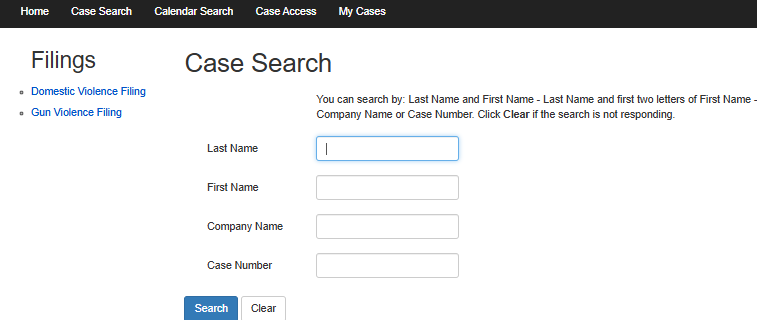
Below are the steps that explains how to search for family cases (child custody, support, divorce, guardianship) and what users need to know to complete a successful lookup. Public access also varies by case type, especially for matters involving minors or confidential orders. Public searches are limited to basic case details and may cap the number of daily searches. If a specific docket or document is not displayed online, it might be viewable in person at the courthouse clerk’s office.
Access the Official Case Search Portal
- Open your web browser and enter the official Solano Superior Court Portal URL: https://portal.solano.courts.ca.gov/
- The portal is the court’s secure case management system where public and authorized users perform searches.
Choose Your Search Method
The portal typically provides multiple ways to search court records:
By Case Number
- Enter the exact case number if you have it.
- This is the most precise way to find a single record.
By Party Name
- Enter the first and last names of the involved party exactly as they appear in the case.
- Name searches may return multiple matches—use additional filters if available.
By Other Criteria
- Some portals allow search by attorney name or date range.
Create an Account
If you need expanded access or want to view more detailed case information (beyond basic public lookup):
- Click Register on the portal and provide your email, first/last name, and phone number.
- Agree to the terms of use and confirm the account with the email verification link.
- Log in using your email and password.
Enter Search Terms & View Results
After choosing your search method:
- Enter the case number or party name in the correct fields.
- Click Search.
- A list of cases that match your criteria will appear (if any).
- Select the correct case from the results.
What you can see:
- Case type (e.g., family law, custody, support)
- Case number
- Filed documents (basic indexes)
- Register of actions (docket entries listing key events and hearings)
Review and Interpret Search Output
When you open a case record:
- Check the case status (open, closed, pending hearings).
- Review the register of actions (chronological list of events like filings, hearings, orders).
- Note hearing dates, departments, and judge assignments.
- Some text may be truncated online; official filings might require in‑person access or a certified copy.
Access Restricted or Sensitive Records
Certain family court details are not publicly available due to privacy protections (child custody specifics, restraining orders, sealed documents). If you need full access:
- You may need a court order or authorization.
- Contact the clerk of the court or family law facilitator’s office for assistance.
Visit the Courthouse in Person
If online search does not show the documents you need:
- Visit one of the Solano County court locations (Fairfield or Vallejo).
- Ask the clerk for help with public terminals to look up case files.
- Provide the case number or party names for faster retrieval.
Types of Family Court Cases in Solano County
Family law court Solano County handles a wide range of cases affecting children, spouses, and other family members. This court ensures that legal matters related to custody, support, divorce, guardianship, and domestic disputes are addressed fairly and in accordance with California law. Individuals, attorneys, and authorized parties rely on the court to resolve conflicts, establish legal responsibilities, and enforce orders. Each case type has specific procedures, requirements, and legal standards that guide the court’s decisions, helping families navigate sensitive issues while protecting rights and welfare.
Child Custody & Visitation
In custody court Solano, the court determines both legal custody (decision-making authority) and physical custody (where the child lives). Custody arrangements are based on the child’s best interests and parental involvement. Visitation schedules establish when a non-custodial parent may spend time with the child. Courts encourage parents to agree on visitation plans whenever possible, though judges can issue orders if disputes arise. Mediation services are also available to help families reach mutually acceptable arrangements, reducing conflict and court intervention.
- Legal custody: decision-making power for education, healthcare, religion.
- Physical custody: residential arrangement of the child.
- Visitation: weekends, holidays, and special occasions schedules.
Child & Spousal Support Orders
Family court manages child support hearings and spousal support to ensure financial responsibilities are met. Support amounts are calculated using state guidelines, which consider income, childcare costs, healthcare, and other relevant factors. Courts can modify support orders if circumstances change, such as job loss or increased expenses. Enforcement mechanisms include wage garnishment, liens, and, in some cases, contempt proceedings for noncompliance. These orders help provide stability for children and spouses following divorce or separation.
- Support calculation: based on income, childcare, and living costs.
- Modification: possible with material change in circumstances.
- Enforcement: wage garnishment, liens, court orders.
Divorce & Domestic Relations
Divorce and domestic relations cases involve dissolving marriages or legal separations, property division, and spousal support. Judges review marital assets and debts to determine fair distribution. Many courts encourage mediation before hearings to help couples reach amicable agreements on property, support, and parenting plans. Domestic relations cases may also address legal separation and reconciliation arrangements when appropriate.
- Property division: equitable distribution under California law.
- Spousal support: temporary or permanent payments.
- Mediation: often required for conflict resolution.
Guardianship & Adoption
Guardianship cases assign legal responsibility for minors or adults unable to manage their own affairs. Temporary guardianship provides short-term oversight, while permanent guardianship gives long-term authority. Adoption cases involve legal processes to transfer parental rights to adoptive parents. Courts review the best interests of the child, background checks, home studies, and consent requirements before finalizing adoption or guardianship.
- Temporary vs. permanent guardianship.
- Adoption process: petition, home study, consent, court approval.
- Legal responsibility: healthcare, education, financial matters.
Domestic Violence & Protective Orders
Family law courts also handle restraining orders and emergency protective orders to protect victims of domestic violence. Petitioners can request orders against partners, ex-spouses, or other household members. Courts may grant temporary or permanent orders, restricting contact, residence, and communication. These measures help ensure safety while legal proceedings continue for custody, support, or divorce matters.
- Emergency protective orders: immediate, short-term protection.
- Restraining orders: long-term measures, may include child custody restrictions.
- Legal enforcement: violation of orders can result in arrest or fines.
Solano County Family Court Services
Family court Solano County provides multiple ways for individuals to manage their family cases, including filing petitions, paying fees, and attending hearings. Services are accessible online through the official portal or in person at the courthouse. The court also offers resources for self-represented parties, helping them navigate procedural steps and stay updated on case progress. Using these services correctly ensures timely filings, reduces errors, and helps parties comply with legal requirements while keeping their cases on track.
- Online portal: https://solano.courts.ca.gov/
- Case status: “Find Your Case Status” using case number or party name
Access Court Services Online
The Solano County family court portal allows users to perform case searches, submit filings, and schedule hearings from anywhere through Court Connect. Individuals can access forms for custody, support, divorce, and guardianship, and check docket entries or upcoming hearings. The portal is secure, updated regularly, and designed to reduce in-person visits for basic case management tasks. Users can also register accounts for additional access to detailed case information and electronic notifications about their filings.
- Use case number or party name to search records
- Check upcoming hearing schedules and document filings
Filing Petitions, Paying Fees
When filing petitions with family court, you must use the appropriate forms and pay filing fees unless you qualify for a waiver. Common fees under California’s statewide fee schedule include approximately $435 for a new family law case filing (petition or first paper) such as divorce, custody, or parentage. Domestic violence restraining order filings are generally fee‑free. Petitions for adoption have a $20 filing fee, but additional court investigation costs may apply depending on the type. Fee waivers are available for people with low income using Judicial Council forms FW‑001 and FW‑003.
Typical fees you may encounter:
- New family law or divorce/parentage case filing: $435 (approx.)
- Domestic violence restraining order filing: No fee
- Adoption petition: $20 (plus investigation fees depending on case)
- Fee waiver request: No filing fee (if approved)
Scheduling and Attending Hearings
After filing, hearings are scheduled based on case type and court availability. Parties can confirm dates via the online portal or by contacting the clerk’s office. Attendance is required in person unless the court allows virtual hearings. Bringing all necessary documents and arriving early ensures compliance with court procedures. Following hearing rules and keeping records of orders issued helps protect legal rights and ensures smooth case progression.
- Confirm hearing dates online or through the clerk
- Attend in person or follow virtual hearing instructions if applicable
Accessing Self-Help Centers and Legal Assistance
Solano County provides self-help resources for individuals representing themselves in family law cases. The Family Law Self-Help Center offers guidance on completing forms, procedural questions, and preparing for hearings. Legal aid organizations may provide free or low-cost assistance to qualified individuals. While court staff can explain procedural steps, they cannot offer legal advice, so additional support from attorneys or nonprofit services may be necessary for complex cases.
- Family Law Self-Help Center: https://solano.courts.ca.gov/divisions/family-law
- Nonprofit legal aid for low-income individuals
Court Procedures and Timeline
Family law court Solano County follows set steps from filing a case through hearings and final orders, helping parties resolve custody, support, divorce, and related matters. The process includes submitting valid documents, attending pre‑trial discussions, participating in family case hearings Solano, and receiving official orders. Each case moves at its own pace, but understanding the general flow and typical timeline helps parties stay organized and ready for scheduled events. Below is a clear explanation of how these procedures work and what to expect along the way.
Filing and Initial Steps
When a party starts a case, they file the original petition with the court and pay any required fees or submit a fee waiver request. Filing creates a case number and adds the matter to the court’s docket entries. The clerk provides a filed‑stamped copy and information about next steps. After filing, the petitioner must serve the other party according to California rules. Proof of service must be returned to the court before further proceedings occur. Typical first actions include:
- File petition and pay fees (or fee waiver).
- Serve the other party with court papers.
- File proof of service with the court.
- Case appears on the hearing schedule once ready.
Pre‑Trial Mediation and Conferences
Before a trial, many family law cases are referred to pre‑trial mediation to help parties resolve key issues such as custody, visitation, support amounts, or property division. Mediation may be required by the court and takes place with a neutral third party. If an agreement is reached, mediators draft terms for submission to the judge. If mediation does not resolve the dispute, the case moves forward to scheduled hearings. Parties also attend case management or settlement conferences where they discuss progress and readiness for trial. These are noted in family court proceedings and recorded in the docket.
Hearings and Evidence
Once mediation and conferences are complete, the court schedules formal hearings. For child custody or support cases, evidence often includes: income records, school or medical information, expense statements, and parenting plans. Bring originals and copies for the judge and other parties. At these sessions:
- Each party presents evidence and arguments.
- Witnesses may testify if needed.
- Judges review financial declarations, custody proposals, and supporting documentation.
Typical Timeline
More complex disputes or contested matters may take longer. Court calendars and continuances also affect schedule. Although every case differs, common timelines include:
- Filing to first hearing: 6–12 weeks on average.
- Mediation and conferences: within 60–90 days of filing.
- Final orders or trials: 3–9 months depending on complexity and compliance.
| Case Stage | What Happens | Approximate Timeframe |
|---|---|---|
| Filing & Case Number Issued | Petition filed, fees paid, case opened | Day 0 |
| Service of Process | Other party is properly served | 1–3 weeks after filing |
| First Court Appearance / Status Hearing | Court sets schedule, ensures service | 6–12 weeks after filing |
| Pre‑Trial Mediation / Conference | Parties meet with mediator | 8–12 weeks after filing |
| Declaration and Evidence Exchange | Financials, parenting plans submitted | 10–16 weeks after filing |
| Family Case Hearings Solano | Formal hearings if issues are unresolved | 3–6 months |
| Judgment or Final Order | Final written decision entered | 4–9 months depending on complexity |
Preparation and Documentation
Parties should consult the court’s official site (https://solano.courts.ca.gov/) for local rules, calendars, and specific procedural requirements. Familiarity with these steps and timelines can reduce delays and help cases progress smoothly through family law court in Solano County. Preparation is key to efficient family court proceedings:
- Organize all forms and exhibits in order.
- Use clear labels and binders for financial documents.
- Review the hearing schedule and arrive early.
- Anticipate questions from the judge and prepare concise responses.
Legal Forms and Filing Requirements
Solano County Family Court requires specific forms for each type of family case, including custody, support, guardianship, and protective orders. Accurate completion and timely submission of these forms are essential to keep cases on schedule and avoid delays. The court allows filings both online and in person, and each petition type has supporting documents and instructions that must be followed carefully. Using the correct forms ensures that hearings, orders, and other proceedings proceed efficiently while complying with California family law requirements.
- Access all official forms here: https://courts.ca.gov/rules-forms/court-forms
- Submission methods: online via portal or in person at the courthouse
Completing and Submitting Forms
Completing forms for Solano County Family Court requires attention to detail. Each field must be filled accurately, supporting documents attached, and signatures dated properly. Some forms may need notarization or proof of service. Once completed, forms can be filed online through the court’s secure portal or delivered in person to the Family Law Clerk’s office. Following these steps ensures the court accepts filings and the case can progress without unnecessary delays or resubmissions.
- Attach financial records, custody schedules, or other supporting documents
- Save or print confirmation receipts for online filings
Online vs. In-Person Filing
Filing forms online provides convenience, allowing access to court services from anywhere, while in-person filing ensures immediate confirmation and assistance from court staff. The Solano County portal accepts most family law forms and provides electronic receipts for submissions. In-person filings allow staff to verify form completeness and provide guidance on required attachments. Both methods are valid and secure, and the choice depends on user preference, technology access, and the type of case being filed.
- Online portal: https://solano.courts.ca.gov/divisions/family-law
- In-person filing: Family Law Clerk’s office in Fairfield
Family Court Locations and Contact Information
Solano County Family Court operates at multiple locations to serve residents across the county. Each courthouse provides access to filing services, hearings, and the Family Law Self-Help Center. Knowing the correct location, office hours, and contact details helps parties plan visits efficiently, whether attending hearings, filing documents, or consulting with court staff. Parking availability and maps are also provided to make courthouse visits easier for first-time and returning visitors.
Main Courthouse – Fairfield
The Fairfield location is the primary family law courthouse in Solano County. It handles filings, hearings, and provides self-help services for family law matters. Visitors can access parking on-site and follow signs to the Family Law division.
- Address: 600 Union Avenue, Fairfield, CA 94533
- Phone: (707) 207-7250
- Office Hours: Monday – Friday, 8:30 AM – 4:00 PM
- Parking: Public lots available near the courthouse
Vallejo Courthouse
Vallejo courthouse offers support for select family law cases and provides access to court staff for procedural guidance. Visitors are advised to confirm if their case will be heard in Vallejo before traveling.
- Address: 321 Tuolumne Street, Vallejo, CA 94590
- Phone: (707) 553-5500
- Office Hours: Monday – Friday, 8:30 AM – 4:00 PM
- Parking: Street parking and nearby lots available
Frequently Asked Questions
Family law court Solano County handles cases related to custody, support, divorce, guardianship, and domestic disputes. Residents often have questions about filing, hearings, and legal procedures. This FAQ section provides clear, practical guidance to help parties navigate the court system. Answers focus on procedural steps, required documentation, and available resources while ensuring compliance with California family law. These concise explanations help users address common concerns efficiently and prepare for each stage of their family court matters.
How do I file for child custody?
To file for child custody in Solano County, start by completing the required petition forms available online at https://courts.ca.gov/rules-forms/court-forms or at the courthouse. Submit forms online through the court portal or in person at the Family Law Clerk’s office. After filing, serve the other parent with copies and file proof of service with the court. The court may schedule mediation or hearings to discuss custody and visitation. Accurate forms and proper service are critical to ensure your case proceeds efficiently.
How do I request child or spousal support?
To request support, complete the appropriate petition forms and submit them either online or in person. Include income and expense declarations, proof of income, and other supporting documents. The court will review the information and may schedule a hearing to establish temporary or permanent support orders. California guidelines determine amounts for child and spousal support based on income, childcare costs, and other expenses. Accurate documentation is essential to ensure fair calculation and timely enforcement of support obligations.
Can I modify a custody or support order?
Custody or support orders can be modified if there is a significant change in circumstances, such as relocation, income change, or the child’s needs. File a Request for Order (RFO) with the court and provide supporting evidence. The court will schedule a hearing where both parties can present their case. Mediation may occur before the judge issues a decision. Modifications require a clear reason recognized under California law, and proper documentation is essential to show that changing the existing order is in the best interests of the child or parties involved.
Are all family court records public?
Not all family law court Solano County records are public. General case information such as case numbers, hearing dates, and filings is often accessible online or at the courthouse. Sensitive details involving minors, domestic violence, or protective orders may be restricted or sealed. Only authorized individuals may access these protected records. Parties can view available public records through the court portal or by requesting in-person access. Restricting sensitive information ensures privacy and safety while still providing transparency for procedural matters.
How do I schedule a family court hearing?
After filing, the court schedules hearings based on case type and procedural requirements. You can confirm your hearing date online via the Solano County court portal or contact the Family Law Clerk. Some cases require pre-trial mediation or case management conferences before a formal hearing. Ensure all forms, filings, and proof of service are completed beforehand. Arrive early for your hearing with all required documents. Proper scheduling and preparation help the hearing proceed efficiently and reduce the chance of delays or continuances.
What if I cannot afford an attorney?
Individuals who cannot afford an attorney can access the Family Law Self-Help Center, which provides guidance on forms, procedures, and court preparation. Nonprofit legal aid organizations may offer free or low-cost legal assistance for eligible parties. Court staff can answer procedural questions but cannot provide legal advice. Fee waivers are available to reduce filing costs for qualifying individuals. Using these resources helps parties navigate custody, support, and other family law matters without incurring high legal expenses while ensuring compliance with court rules and deadlines.